
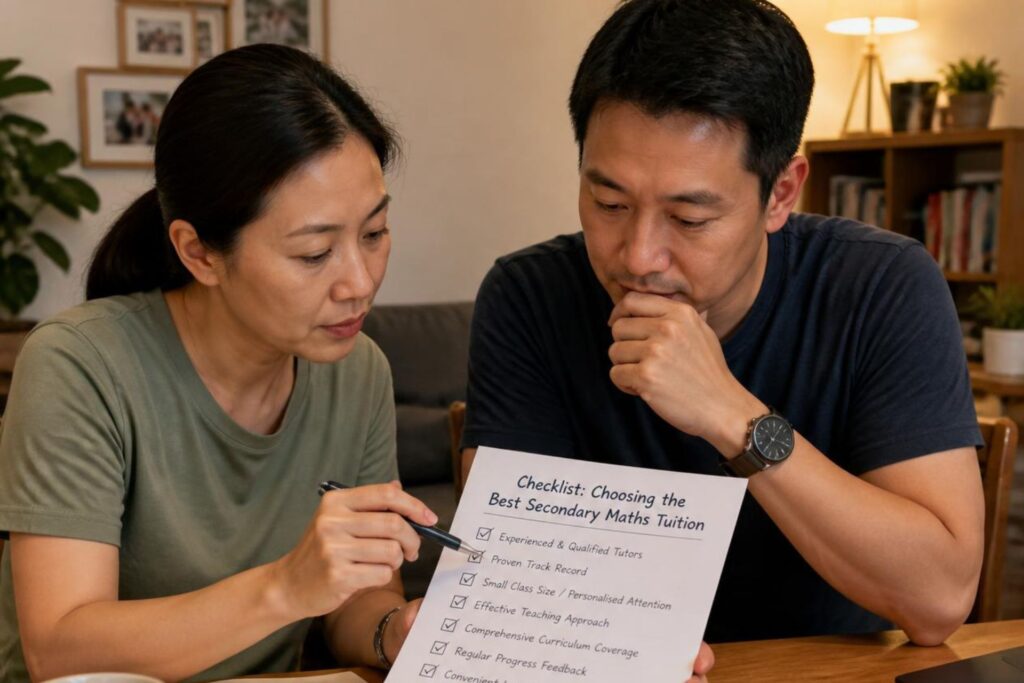
Comparing tuition programs can be like a full-time occupation on its own. Every website of a centre states roughly the same things: “experienced instructors,” “proven results,” “small classes,” and after visiting some, everything gets muddled. If you’ve been bouncing between centres looking for a method you can discern one program from another, you’re certainly not all on your own.
We at Knock out Math, we meet with parents who are in this same situation often. Instead of another list of promises that aren’t real, we’ve compiled an actionable checklist that you can actually carry to the table when you’re comparing alternatives in light of what we’ve seen that really matters throughout the years.
Start With the Basics: What Does a Typical Lesson Look Like?
Before you do anything else, get the center to walk you through what a typical course actually looks like, step-by-step. This is not the version that you see on TV, the real thing. Are there opportunities for a child to tackle the problems on their own, or is it mainly a teacher presenting examples? What percentage of the class is review and new content? A center that is able to be able to answer this question clearly and in a non-questionable manner, typically one that has thought about the method they use to teach, not only what they teach.
Ask About Class Size, and Then Ask Again
The class size is discussed in nearly every marketing campaign of a tuition center; however, the amount is more important than the ambiguous phrase “small courses.” Inquire directly: what is the number of students are there on average in a typical class of secondary students? If the numbers fluctuate depending on the person asking, or the center is hesitant to answer the question in a straightforward manner, consider that to be useful data in and of itself.
Fewer students means that the tutor is able to spot the signs of confusion earlier, before it escalates into a larger gap. A child who is unable to find a way out in a class of many remains stuck for a long time before anyone is aware.
Check Whether the Programme Adjusts for Secondary-Level Difficulty
Secondary maths demands something completely different from students than elementary school. There’s more thinking involved: multi-step tasks, multi-step challenges, and subjects that are heavily based upon the ones that were taught in the year prior.
A great secondary math tuition Singapore program must reflect that change in the way lessons are designed, not only in the difficultness of the worksheets, but also in how much time is spent on developing reasoning abilities instead of doing more practice exercises.
Find out how the curriculum is different for secondary students in comparison to primary students. If your answer to this question is “we simply ask more difficult-to-answer questions,” this is a signal that the way of teaching hasn’t changed to meet the needs that secondary students actually require.
Find Out What Happens During the School Holidays
Many families don’t think about their children until the time is too far however, the school holidays can have a significant impact on the way the rest of the year runs. Check if the center offers intensive holiday programmes, and in the event that they do, what they actually include. Are these simply extra classes of revision squeezed into a smaller timeframe, or are they based around the specific issues the child has had difficulty overcoming during the course of the year?
The best-run intensive holiday programmes tend to be most effective when they’re targeted instead of general, and focus on the three or two subjects that the child is unsure of, rather than trying to fit all the curriculum into just only a couple of weeks. If a school can’t tell the difference between their holiday classes and how they differ from regular lessons during term time, it’s a good idea to ask additional questions prior to committing.
Look Into How Progress Is Tracked and Shared
It’s easy for parents to think that their child’s progress is a matter of monitoring because their child attends classes regularly, but this is not the case in all cases. Find out how the center tracks whether the student is getting better, whether through periodic tests, informal check-ins, or something more formal. Also inquire about how the information is relayed back to you as a teacher. Do you receive updates only in the event of a problem, or is there a constant cycle of feedback over the course of time?
Talk to the Tutor Directly, Not Just the Admin Staff
There are many centres that have a front-of-house staff that is responsible for enrolment as well as questions; that is great; however, at some point, it’s worth talking directly to the tutor who will be actually instructing your child. Find out what they’d do to tackle the subject your child has difficulty with. The answer they give will reveal more about the quality of their teaching than anything you can find in an instructional brochure.
Sit In on a Trial Lesson if You Can
If a center offers a trial class, try it out even if it requires shifting your schedule. The way a teacher communicates with your child in real-time as they assess their understanding, or if they alter their speed when something doesn’t click, is more telling than any interaction with a staff member ever could. Be aware of the way your child is feeling afterward as well. A happy, tired child who talks about something that they’ve finally understood is typically a positive indicator.
Weigh Convenience Against Quality, Honestly
It’s tempting to pick the closest school to home, and in truth it’s true that convenience is important, especially for a child with a busy school schedule. However, convenience isn’t the only thing to consider. A little longer commute for a truly better fit can be worth it, especially in the case of lessons that are scheduled only every other week or once. Be open with yourself about the compromises your family is able to sustain for several months.
What We Focus on at Knock Out Math?
Parents inquire about what makes the top secondary maths tutoring and our answer typically is the same things: smaller classes to ensure that there is no chance of being overlooked tutors who provide the logic behind each step rather than merely a list of steps and a real commitment to remain in touch with the parents over the course of a course of the year instead of just at the time of their report cards.
The holiday sessions we offer are constructed in the same manner, focusing on a specific gap rather than the standard revision packages, since we’ve witnessed the benefits of this method in comparison to generic studying.
Putting the Checklist to Use
All of these questions are difficult; however, the majority of parents do not have all of them in mind prior to signing up, mainly because it’s so easy to get caught up in a convincing selling pitch or to simply have no time to properly compare. If you take even a few minutes to ask questions about the class size, holiday schedules, and the way a teacher actually teaches could save you lots of stress later.
If you’re currently comparing choices for best secondary maths tuition, we’ll be happy to explain the process we use to run our programmes, and include those that are intensive holiday programmes, and answer any questions in this list in person. Sometimes, the best method of determining if the program is right for you is to simply ask and then see how honest an answer from the center is.